
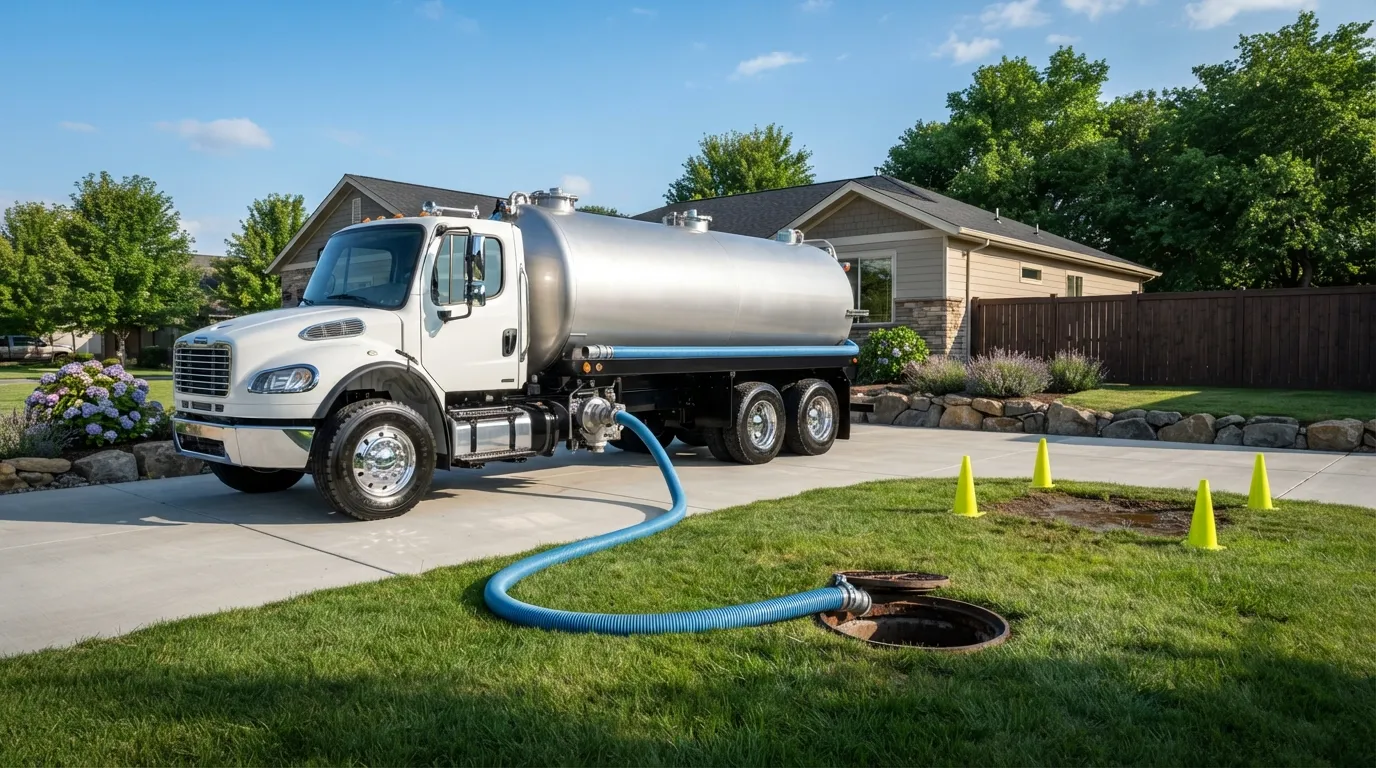
How Often Does a Septic Tank Need Cleaning?
The 3 to 5 year window is a range, not a rule for every house. A family of six in a smaller tank pushes toward the 3 year mark. A couple in an oversized tank might stretch closer to 5, similar to how a portable restroom rental gets sized to expected headcount rather than guesswork. Wilmington Porta Pros gets calls from homeowners who have never pumped a tank in over a decade, and that is where the trouble starts. If you are unsure which end of the range fits your household, our septic pumping service page walks through what we look at during an inspection. Garbage disposals, long showers and extra guests all shorten the interval. So does a tank that was undersized for the house from the start. If you are budgeting for the visit, septic tank pumping cost breaks down what affects the price, and our septic tank cleaning service handles the actual pump-out once you are due.
What Happens If You Wait Too Long?
Solids build up past the point the tank can hold them, and they start moving into the drain field where they do real damage. That is expensive to fix and sometimes means replacing the field entirely, the same way ignoring dumpster weight limits on a renovation job can turn a simple haul-away into a costly redo. Watch for slow drains, gurgling pipes or standing water near the tank. We cover the early warning signs in detail on septic tank warning signs, and if the tank has already backed up, emergency septic service is the faster path than waiting for a scheduled slot. Commercial kitchens have a related but different problem: grease interceptors need pumping once fats, oils, grease and solids reach 25 percent of the liquid depth, well before a typical residential timeline would apply. If you run a restaurant or catering operation near Wilmington, see grease trap pumping for that separate schedule. Homeowners doing a renovation that takes the bathroom offline for a stretch sometimes need a stopgap, and a rented unit covers that gap; check holding tank rental for options.
How Do I Know What Size Tank I Have?
Most Wilmington-area homes have tanks somewhere between 750 and 1,500 gallons, sized loosely to bedroom count and household size at the time of construction, much like a storage container rental gets sized to the job rather than picked at random. If you do not know your tank size, your county property record or a past pumping receipt usually has it, the same kind of paperwork check we recommend before booking a construction dumpster rental for a bigger project. Once you know the size, matching it against how many people live in the house gets you into the right range. A single-person household in a 1,500 gallon tank might genuinely stretch past 5 years between pumps. A family of five in a 750 gallon tank should probably not wait that long. Here is roughly how that plays out:
| Household size | Tank size | Typical interval |
|---|---|---|
| 1-2 people | 1,000 gal | closer to 5 years |
| 3-4 people | 1,000 gal | 3 to 4 years |
| 5+ people | 750-1,000 gal | closer to 3 years |
| 1-2 people | 1,500 gal | 5 years or more |
These are starting points, not guarantees. A tank that has never been pumped needs an inspection regardless of the math above, much as a job site with no prior sanitation plan should start with construction site services rather than guessing at counts.
Why Does Wilmington Matter Here?
Local soil conditions, water table depth and the age of housing stock all affect how a drain field handles the load, and Wilmington's mix of older homes and newer developments means two houses on the same street can be on very different pumping schedules. If you are new to the area and inherited a septic system with no service history, get it inspected before you guess, the same caution we give anyone asking how many porta potties do I need for an unfamiliar property. We serve Wilmington and drive out to nearby towns too: Newark sits 16.5 miles west, Chester is 14.0 miles northeast, and Ridley is another 18.3 miles beyond that. If your property is outside Wilmington proper, check service areas to confirm we cover your address, or look at Porta Potty Rental in Newark, DE if you are coordinating a project that spans both septic work and portable sanitation. Homeowners handling a renovation sometimes need portable toilets on-site while plumbing is disconnected; our home renovation porta potty page covers that scenario, and general portable toilet rental options are listed for anyone comparing unit types.
How much does septic pumping cost in Wilmington?
Pricing depends on tank size, access and how much buildup there is. Day-rate septic service in our measured range runs from 150 to 300 dollars, with a lower weekend rate available in some cases. See septic tank pumping cost for the full breakdown before you schedule.
Can I pump my own septic tank?
Legally in some cases, but it is not something most homeowners should attempt. The tank contains hazardous gas, the pump-out requires specialized equipment, and disposal of the waste has its own rules. Hire a licensed service instead, the same logic that applies to OSHA portable toilet requirements on a job site: leave the compliance work to people who do it daily.
Do all septic tanks need pumping on the same schedule?
No. Interval depends on tank size, household size and water usage habits. A 1,000 gallon tank serving two people behaves very differently than the same tank serving six. Match your schedule to your actual household, not a flat rule.
What are the warning signs I've waited too long?
Slow drains, gurgling in the pipes, sewage odor near the tank or drain field, and standing water in the yard are the big ones. See septic tank warning signs for the complete list before symptoms turn into a backup.
Does a garbage disposal change my pumping schedule?
Yes. Disposals add solids to the tank faster than normal use, which shortens the interval. Households with heavy disposal use should lean toward the shorter end of the 3 to 5 year range rather than the longer one, and if plumbing goes offline during that work, emergency porta potty rental can bridge the gap.

Next step
Get a delivery date
Tell us the address, the dates and the headcount. We size the order and confirm the route.