
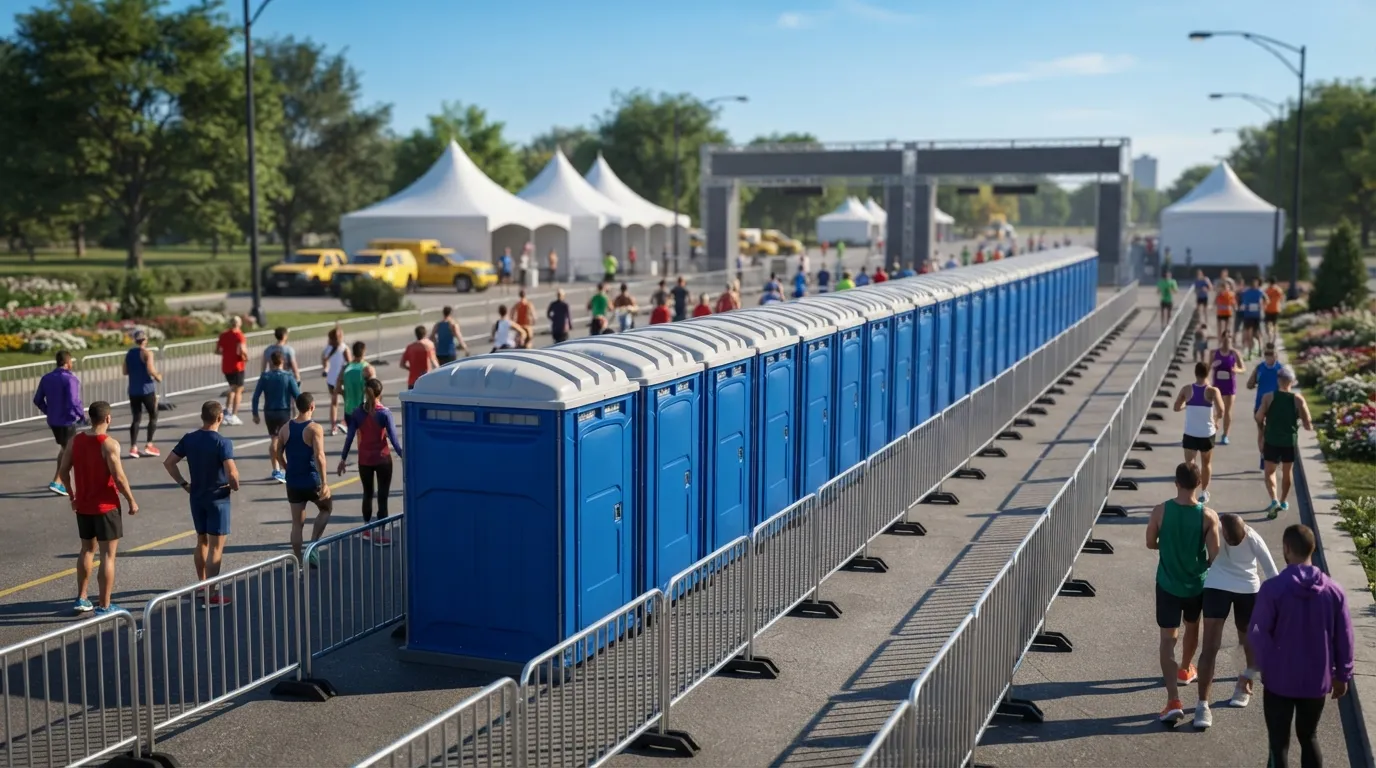
How many restrooms does a marathon or race need?
Start with the crowd count, then split it by location. A start line with 500 runners waiting 30 minutes before the gun needs more units than a finish line where people scatter fast. OSHA's construction ratio in 1926.51(c) isn't written for races, but race directors in Wilmington often use it as a floor: 1 toilet for every 20 people, scaling up as numbers grow. For a 5K with 300 runners, that's a cluster of standard units at the start, a smaller set at mile 2 or 3, and a bigger bank at the finish where families and spectators wait around. Don't forget volunteers and staff working the course for hours; they need access too, not just runners passing through once. If your course crosses through downtown Wilmington and finishes near a park pavilion, plan restroom placement around road closures and staging areas the same way you'd plan water stops. A porta potty placement guide helps with sightlines and ground stability, since ADA Standards 302.1 calls for stable, firm, slip-resistant surfaces at any accessible unit. Races held on grass or gravel lots need extra thought here. If you're not sure how many units your specific course needs, How Many Porta Potties Do I Need walks through the math by headcount and event length. Renting through Wilmington Porta Pros means the delivery crew can walk your course map with you before race day and flag spots that won't work for a service truck.
What restroom options work best for race day?
Standard units cover most of the course, but finish lines and VIP areas often want more. A deluxe flushable unit near the finish gives sponsors and elite runners a nicer option, and it still fits the same 44 by 48 inch footprint as a standard unit. For races with a big spectator draw, an event restroom package or even a small restroom trailer at the finish line handles higher traffic without long lines. A 2 stall restroom trailer or 4 stall restroom trailer makes sense for races expecting a few thousand spectators near Wilmington's downtown venues. Every cluster of units also needs an accessible option: ADA Standards 213.2 requires at least 5 percent of clustered single-user units be accessible, with a minimum of one, and each needs the 60 inch turning space called for in ADA Standards 304.3.1. Pair restrooms with a handwashing station rental at aid stations, since runners handle gel packets and water cups all race. If your course also needs crowd control at narrow points, a temporary fence rental or crowd control barrier rental keeps foot traffic organized around restroom clusters so lines don't spill into the running lane.
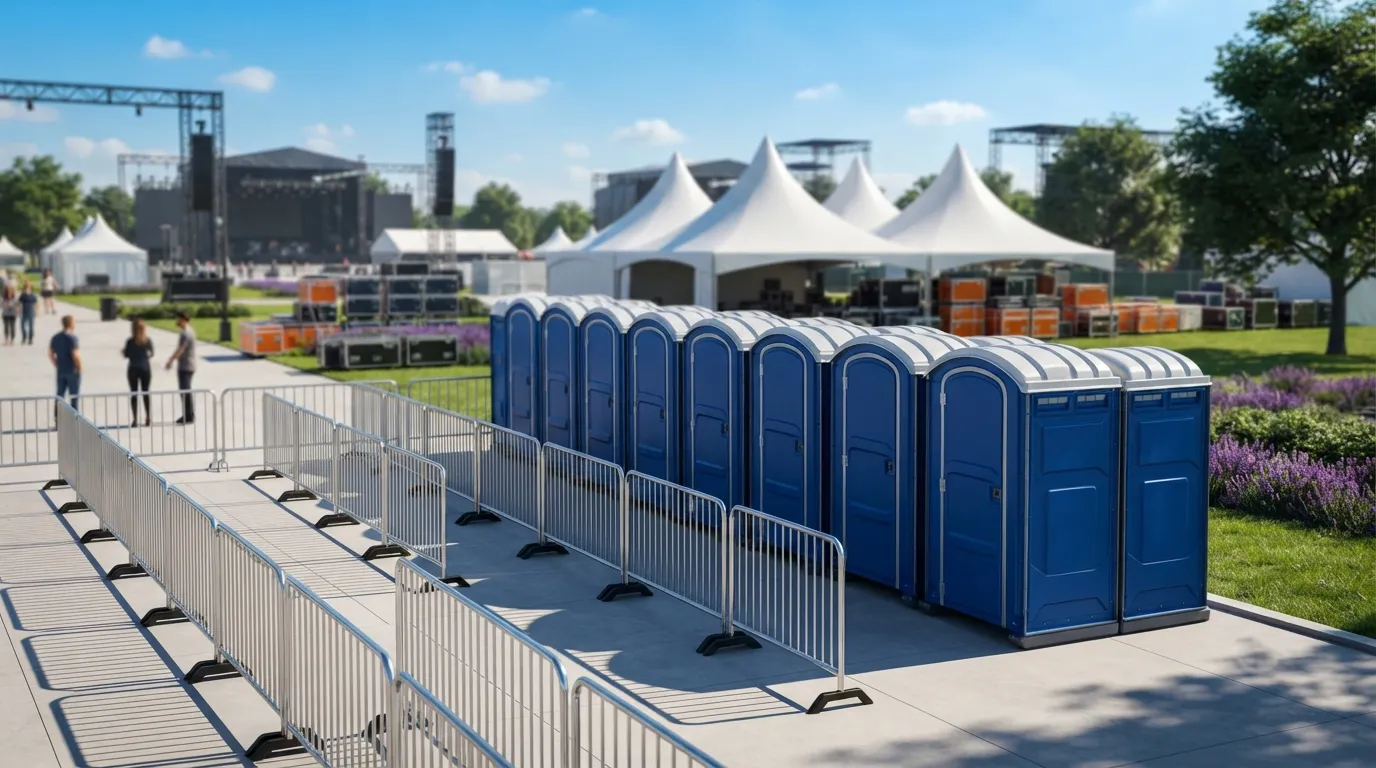
What power and setup does a race site need?
Race timing tents, PA systems, and light towers for early-morning starts all draw power, and that means running a temporary power pole safely. Knowing how to brace a temporary power pole matters before you ever plug in a timing clock: crews set the pole in a stable base, keep guy wires taut at multiple angles pulling away from the pole, and route cords away from foot traffic so runners and volunteers don't trip lines near the start chute. GFCI protection matters here too, echoing the general spirit of OSHA 1926.404(b)(1)(ii) on construction sites, even though a race isn't a jobsite. If your race starts before sunrise, a light tower rental at the staging area helps volunteers set up restrooms and check-in tables safely. Illumination standards under OSHA 1926.56(a) give a useful baseline for how bright a staging lot should be. Once restrooms and power are placed, keep debris and packaging picked up around the units; housekeeping rules like OSHA 1926.25 exist for jobsites, but the same logic applies to a race site covered in gel wrappers and water cups. A roll-off dumpster staged near the finish line handles that cleanup fast, and a 10 yard dumpster rental usually covers a mid-size race without crowding the lot.
| unit | duration | typical price |
|---|---|---|
| standard | day | $150 |
| standard | event | $400 |
| ada | weekend | $240 |
| dumpster | weekend | $440 |
How far in advance should I book race restrooms?
Book as soon as your course and headcount are set, ideally 4 to 6 weeks out. Race weekends compete with weddings and festivals for the same trucks, so early booking through Wilmington Porta Pros locks in your count and placement before slots fill.
Do I need ADA units for a race?
Yes. Any cluster of portable toilets needs at least one accessible unit under ADA Standards 213.2, and larger races need more than one spread across the course, not just at the start.
Can restrooms be placed along the race course, not just at start and finish?
Yes, and it's smart for longer races. Mid-course clusters near mile markers cut down finish-line crowding; check porta potty placement guide for setup on grass, gravel, or paved lots.
What happens if my race is delayed by weather?
Units already on-site stay through delays at no rush charge for placement, though extended service may adjust the quote. Call Wilmington Porta Pros directly if your date shifts.
How does a marathon route near Chester or Newark affect delivery?
Routes stretching toward Chester, about 14 miles northeast of Wilmington, or Newark, roughly 16.5 miles west, need multiple delivery stops planned ahead. Request a quote with your full route map for accurate staging.
Next step
Get a delivery date
Tell us the address, the dates and the headcount. We size the order and confirm the route.